
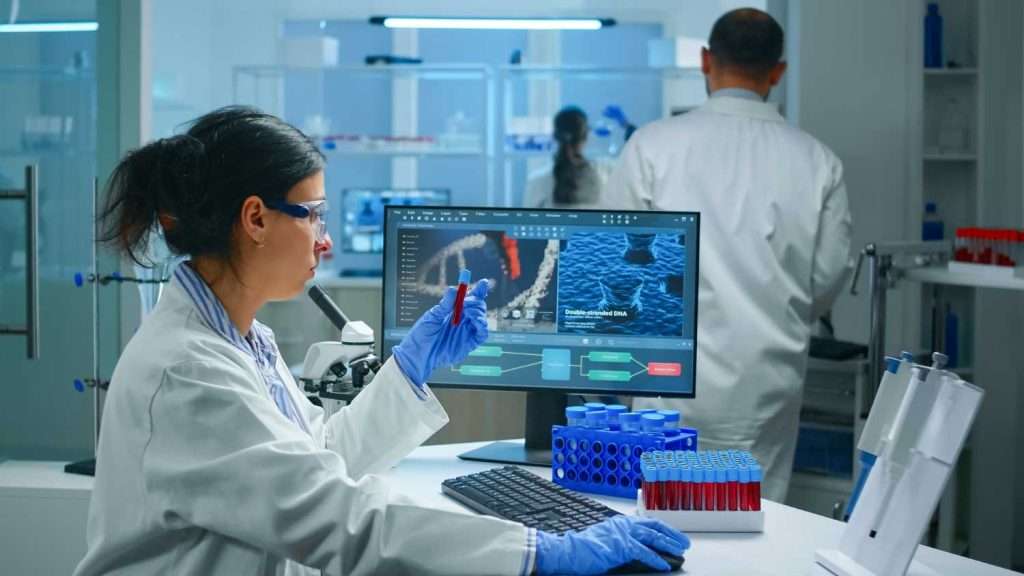
By the end of 2026, laboratory automation will have undergone a fundamental transformation. What was once centered on robotic execution—pipetting liquids, moving plates, and running predefined protocols—has evolved into something far more sophisticated. The modern lab is entering the era of “Physical AI,” where intelligent software systems are tightly integrated with physical laboratory infrastructure to create environments capable of real-time decision-making and adaptive execution.
In this new paradigm, automation is no longer limited to following instructions; it actively participates in the scientific process. Systems can interpret experimental data as it is generated, adjust workflows dynamically, and coordinate across multiple instruments without requiring constant human oversight.
Platforms such as Benchling and Sapio Sciences are enabling this shift by connecting digital experiment design with physical lab execution, effectively bridging the gap between planning and action. The result is a transition from static, linear workflows to modular, flexible systems that can evolve alongside the science they support.
The Core Pillars of 2026 Automation
Modular Workcells: From Fixed to Flexible Systems
One of the most significant architectural shifts in laboratory automation is the move away from large, monolithic conveyor-based systems toward modular workcells. Historically, automation required heavy upfront investment in fixed infrastructure—long conveyor belts, rigid sequencing, and highly customized layouts that were difficult to modify once installed. While effective for standardized, high-volume workflows, these systems struggled to adapt to changing experimental needs.
In 2026, the dominant model is a network of reconfigurable pods, where each workcell performs a specific function—liquid handling, incubation, imaging, or analysis—and can be rearranged as workflows evolve. This modularity allows labs to scale incrementally, adapt quickly to new protocols, and avoid the downtime associated with reengineering entire systems. Instead of designing automation around a single process, labs can now build flexible ecosystems that evolve alongside their research priorities.
Collaborative Robots (Cobots): Human–Machine Synergy
Another defining pillar of modern automation is the rise of collaborative robots, or cobots, designed to work safely alongside human scientists rather than replacing them entirely. Unlike traditional industrial robots that require physical barriers and controlled environments, cobots are built with safety features such as force sensing and adaptive motion, allowing them to operate in shared spaces.
Systems like the ABB GoFa exemplify this shift. These robots can assist with repetitive or ergonomically challenging tasks—such as plate handling, sample transfers, or instrument loading—while researchers remain actively involved in experimental design and oversight. The result is a more balanced workflow in which humans and machines complement each other: robots provide consistency and endurance, while scientists contribute judgment and creativity.
This approach not only improves efficiency but also lowers the barrier to automation adoption, as labs no longer need to completely redesign their physical spaces to accommodate robotic systems.
Digital Twins: Simulating Before Executing
As automation systems become more complex, the cost of errors—such as collisions, failed runs, or wasted reagents—has increased. To address this, many labs are adopting the concept of digital twins, which are virtual replicas of physical lab environments used to simulate workflows before they are executed in reality.
With a digital twin, researchers can model an entire automated run, testing variables such as timing, resource allocation, and instrument coordination. This allows them to identify potential issues—like bottlenecks, tip shortages, or scheduling conflicts—before a single experiment begins. It also enables optimization, ensuring that workflows are as efficient as possible in terms of time, materials, and instrument utilization.
In practice, this means fewer failed runs, reduced waste, and greater confidence in automation at scale. The digital twin becomes a sandbox for experimentation, where ideas can be refined virtually before being deployed physically.
IoT & Edge Computing: Real-Time Intelligence in Motion
The final pillar underpinning modern automation is the integration of Internet of Things (IoT) devices and edge computing, which brings real-time awareness and responsiveness to automated systems. Sensors embedded across instruments and workflows continuously collect data on variables such as temperature, humidity, timing, and mechanical performance.
Rather than sending all this data to a centralized system for processing, edge computing allows analysis to occur locally and instantly, enabling systems to respond in real time. For example, if a temperature deviation is detected during a run, the system can automatically adjust conditions or trigger corrective actions without interrupting the workflow.
This capability transforms automation from a static execution model into a self-correcting system. Robots and instruments are no longer blindly following instructions; they actively monitor their environment and adapt as needed to maintain optimal performance.
The Winners
#1. Hamilton Microlab STAR V — Best for High-Speed Precision
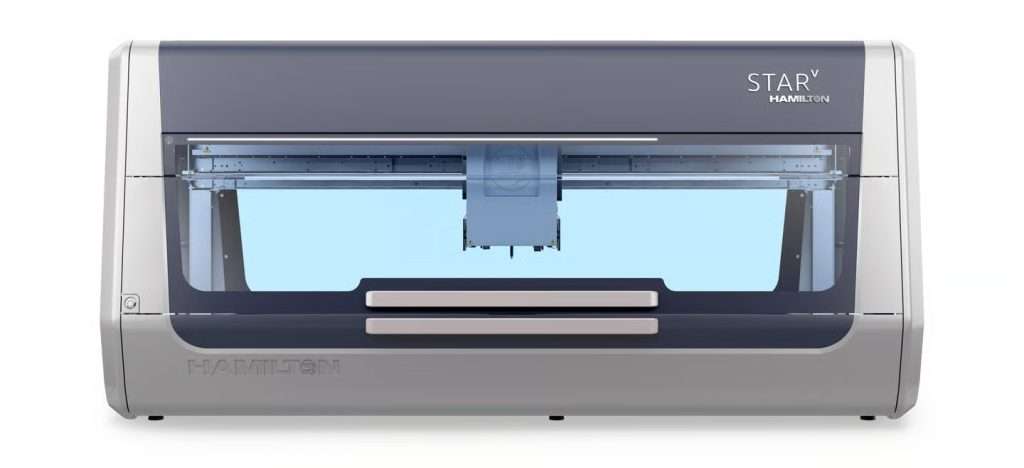
The Hamilton Microlab STAR V continues to define the gold standard for high-throughput liquid handling in 2026. Built on decades of refinement, it combines speed, precision, and reliability in a way that few systems can match, making it a cornerstone in both diagnostics and drug discovery pipelines.
Its key innovation lies in Hamilton’s proprietary MagPip technology and CO-RE II tips, which enable extremely fast and accurate liquid transfers while minimizing errors such as cross-contamination or tip misalignment. These advancements allow labs to process massive volumes of samples with consistent precision, even under demanding conditions.
What keeps the STAR V at the top is not just its performance, but its proven reliability at scale. In environments where even minor errors can cascade into costly delays—such as clinical diagnostics or high-throughput screening—this system delivers the consistency required for industrial-grade operations.
It is best suited for large-scale clinical laboratories and enterprise R&D environments, where throughput, accuracy, and reproducibility are non-negotiable.
Pros: The STAR V remains the “gold standard” for reliability in high-stakes environments. Its CO-RE II technology provides a virtually fail-safe tip-sealing mechanism, which is critical for preventing the costly aerosol contamination common in high-throughput NGS or diagnostic runs. The 2026 update to the VENUS software has significantly improved the user experience with “Power Steps,” making it easier for non-specialists to program routine liquid transfers without sacrificing the deep-level control Hamilton is known for.
Cons: The “Hamilton Learning Curve” is still a factor; while the new software is better, mastering complex, dynamic protocols still requires significant training. Furthermore, Hamilton’s specialized hardware comes with high maintenance costs and a reliance on proprietary tips, which can lead to supply chain vulnerabilities for smaller labs.
#2. Opentrons Flex — Best for Accessible, Open-Source Automation
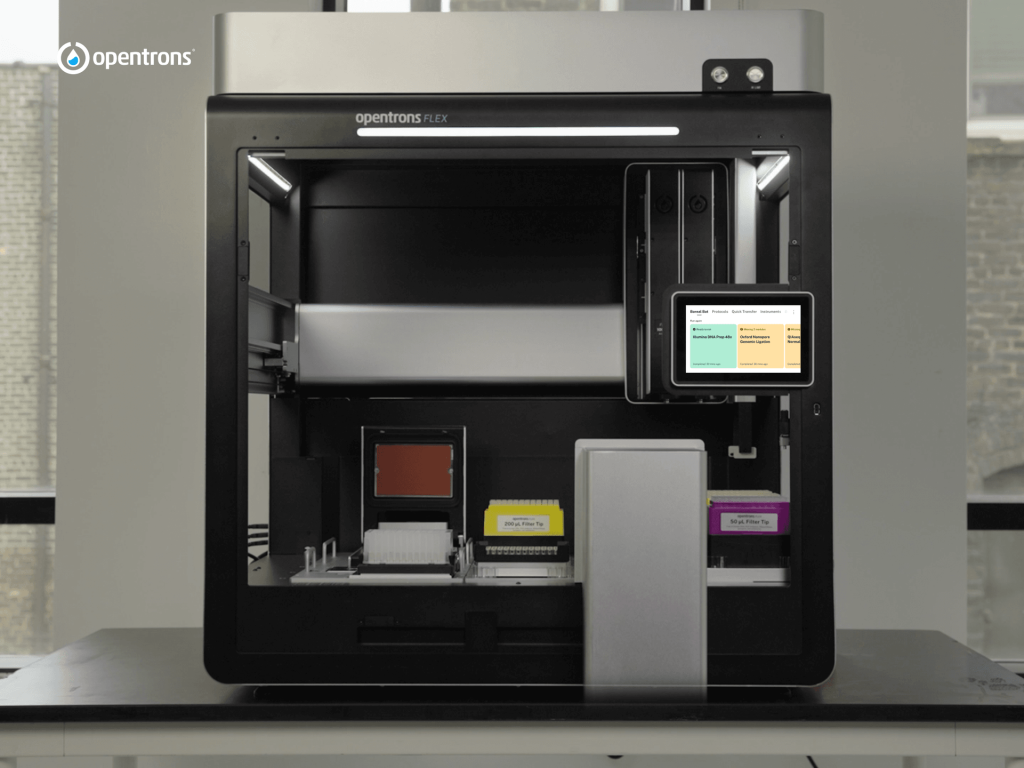
Opentrons Flex represents a fundamentally different philosophy: making automation accessible, flexible, and developer-friendly. In contrast to traditional high-cost systems, Flex has helped democratize lab automation by lowering both financial and technical barriers.
Its modular design features quick-swap pipettes and interchangeable components, allowing labs to rapidly adapt workflows without extensive reconfiguration. More importantly, its API-first architecture enables seamless integration with external tools, including AI-driven design platforms such as NVIDIA BioNeMo.
This openness allows researchers to:
- Program custom protocols
- Integrate automation into computational pipelines
- Iterate quickly on experimental designs
The result is a system that prioritizes agility over rigidity, making it ideal for environments where workflows evolve rapidly.
Opentrons Flex is particularly well-suited for startups, academic labs, and small to midsize biotech teams that need powerful automation without the overhead of enterprise systems.
Pros: The Flex is the champion of democratized automation. Its API-first design allows tech-savvy labs to write custom Python scripts or integrate with AI platforms like NVIDIA BioNeMo with zero licensing friction. The 2026 modularity is a standout—the ability to swap between a 96-channel head and a single-channel pipette in under a minute makes it the most agile “all-rounder” for startups and academic labs that frequently pivot their research.
Cons: While much faster than the older OT-2, the Flex still struggles to match the raw speed and industrial throughput of the Hamilton STAR V. Additionally, being an open system means that “validation” is largely the responsibility of the user; labs in strictly regulated GxP environments may find the lack of a “locked” vendor ecosystem more difficult to validate for clinical use.
#3. Beckman Coulter Biomek i7 — Best for Versatility & Complex Workflows
The Biomek i7 stands out for its ability to handle complex, multi-step workflows within a single platform. Designed for flexibility, it supports a wide range of applications, from sample preparation to assay setup, making it a versatile workhorse in modern labs.
Its defining innovation is the dual-arm hybrid pipetting system, which combines multichannel pipetting with Span-8 capabilities. This allows the system to handle both high-throughput and highly customized tasks simultaneously. Paired with a large 45-position deck, the Biomek i7 can manage intricate workflows involving multiple plates, reagents, and instruments without constant intervention.
What makes it particularly valuable is its ability to bridge “wet” and “dry” lab tasks. In addition to liquid handling, it can perform operations such as plate movement and workflow coordination, reducing the need for separate systems. This makes the Biomek i7 ideal for labs with diverse and frequently changing protocols, especially those running multi-stage experiments that require both flexibility and scale.
Pros: The i7 is the ultimate “multitasker.” Its dual-hybrid arms (combining a 96/384 multichannel head with a Span-8 arm) allow it to perform plate-stamping and individual “cherry-picking” of tubes simultaneously. The 2026 addition of DeckOptix™ cameras is a major safety win; the system uses AI to verify deck placement in real time, pausing the run if a plate or tip box is misaligned, thereby preventing catastrophic crashes in complex, multi-day workflows.
Cons: The sheer size of the i7 can be a hurdle; it requires a much larger laboratory footprint than the compact Firefly or Flex. Some users also report that the Data Acquisition tools, while powerful, can be overly complex to configure for labs that aren’t already integrated into a wider Beckman Coulter ecosystem.
#4. SPT Labtech Firefly — Best for Genomics & NGS
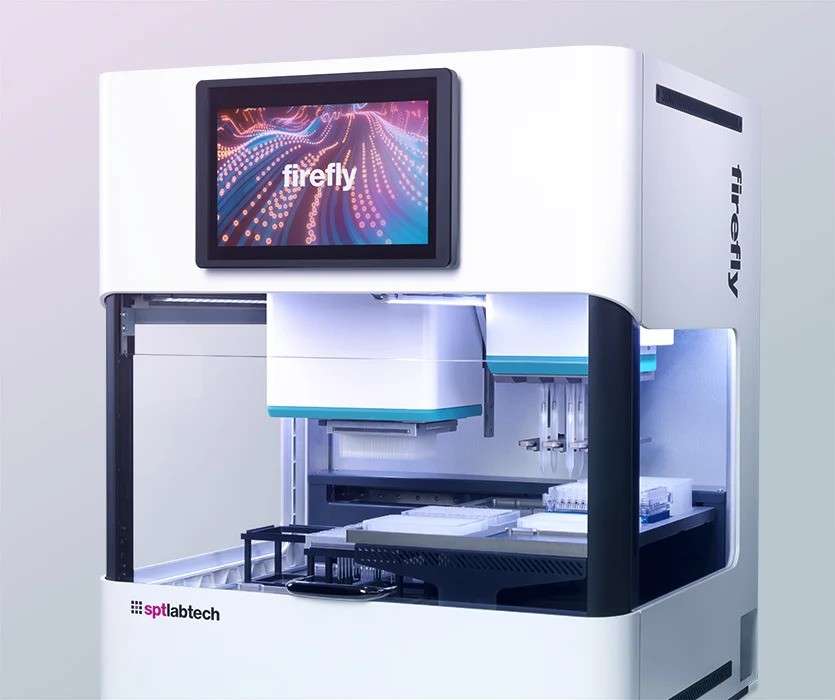
The SPT Labtech Firefly is purpose-built for the unique demands of genomics and next-generation sequencing (NGS) workflows, where reagent costs are high, and precision is critical.
Its standout innovation is the combination of non-contact dispensing with traditional air-displacement pipetting in a single platform. This hybrid approach allows researchers to use ultra-low volumes when needed, significantly reducing reagent consumption without sacrificing accuracy.
In NGS workflows—where reagents can be extremely expensive—this capability translates directly into cost savings. It also improves consistency in sensitive applications such as library preparation and single-cell analysis, where even small variations can impact results.
The firefly is best suited for genomics centers and specialized research labs focused on sequencing, where efficiency, precision, and cost control are tightly interconnected.
Pros: Firefly is the “efficiency expert” for sequencing. Its hybrid dispensing technology (combining air displacement for precision and non-contact dispensing for speed) allows labs to miniaturize assays, often cutting reagent costs by 50% or more. The 2026 software update includes “Cloud-Enabled Methods,” allowing genomics centers to download validated NGS library prep protocols directly from the cloud, ensuring consistency across global sites.
Cons: It is a highly specialized instrument. While it is perfect for genomics, it lacks the general-purpose flexibility of a Biomek or Hamilton. The non-contact dispenser requires careful calibration and cleaning to prevent clogging, making it slightly more “high-maintenance” for labs that aren’t dedicated to sequencing or high-throughput screening.
#5. ABB Robotics AVR™ — Best for “Self-Driving” Labs
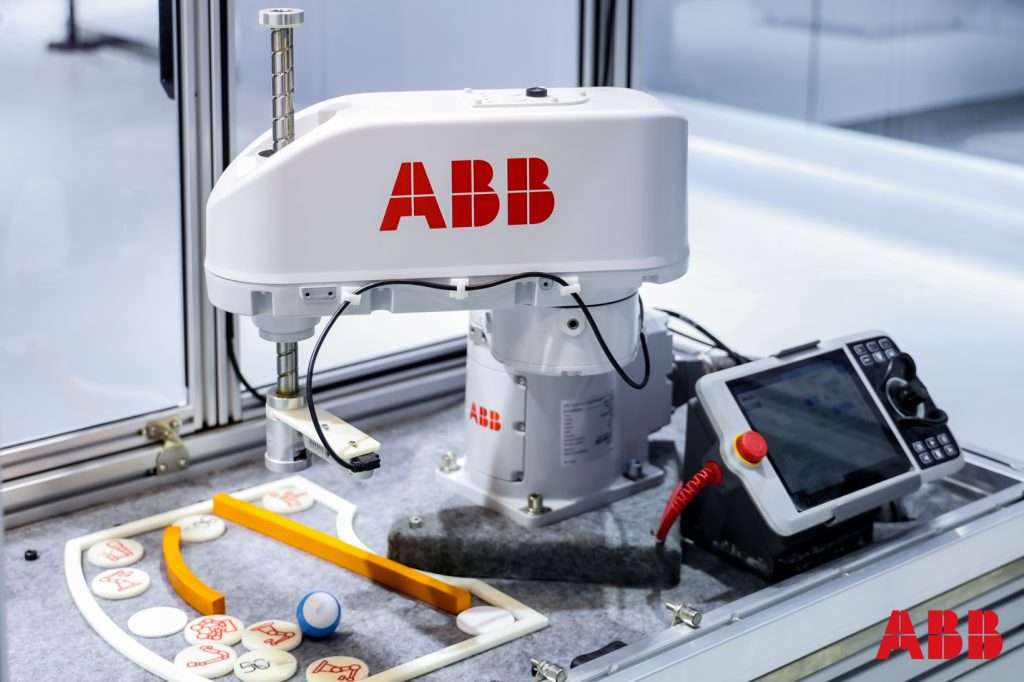
The ABB Robotics AVR™ platform represents one of the most forward-looking developments in lab automation: the move toward mobile, autonomous robotics.
Unlike traditional systems that operate on a fixed deck, AVR introduces AI-powered collaborative robots that can move between instruments—including centrifuges, freezers, and analyzers. This breaks the long-standing limitation of static automation, where workflows are confined to a single physical footprint.
By enabling one robot to service multiple standalone instruments, AVR creates a dynamic, interconnected lab environment. It can transport samples, trigger workflows, and coordinate across systems, effectively acting as the backbone of a distributed automation network.
This approach is particularly powerful for labs pursuing Total Laboratory Automation (TLA) without requiring expensive, facility-wide infrastructure overhauls.
ABB’s solution is best suited for future-focused organizations aiming to build highly autonomous, scalable lab environments that extend beyond traditional automation boundaries.
Pros: The AVR platform is the “brain” of the Total Laboratory Automation (TLA) movement. Unlike static robots, the AVRs’ mobile, AI-powered collaborative robots (cobots) can physically move samples between a freezer, a centrifuge, and a liquid handler from different manufacturers. This “interoperability” is its 2026 killer feature—it essentially “hires” a robot to do the manual walking and loading that usually bottlenecks a lab.
Cons: Implementing an AVR system is a major infrastructure project. It requires a “robot-friendly” lab layout with clear paths and standardized heights for instrument integration. For many labs, the initial capital expenditure and the IT requirements for the AI-driven coordination layer make this a long-term investment rather than a quick automation fix.
Comparing The Top 5
| Feature | Hamilton STAR V | Opentrons Flex | Biomek i7 | SPT firefly | ABB AVR |
| Primary Category | High-Throughput | Budget/Open | Versatile Hybrid | Genomics/NGS | Mobile/Self-Driving |
| AI Integration | Predictive Analytics | API/LLM Ready | Logic-based | Protocol Optimized | Fully Autonomous |
| Footprint | Large | Benchtop | Large | Compact | Mobile |
| Typical Use Case | 24/7 Diagnostics | Rapid Prototyping | Complex Assays | NGS Library Prep | Facility-wide Ops |
Implementation Strategy: How to Buy in 2026
Assessing ROI: From Cost per Sample to Cost per Data Point
In 2026, evaluating the return on investment for lab automation requires a more nuanced approach than traditional cost-per-sample calculations. While throughput and sample volume remain important, they no longer capture the full value of modern, data-driven laboratories. Instead, leading organizations are shifting toward measuring “cost per data point.”
This reflects a deeper reality: the true output of a lab is not just processed samples, but high-quality, usable data. Automation systems that generate cleaner, more structured, and analysis-ready data ultimately reduce downstream costs associated with data cleaning, rework, and failed experiments. For example, a platform that minimizes variability and integrates directly with analysis pipelines may appear more expensive upfront, but can dramatically lower the total cost of producing reliable insights.
By focusing on cost per data point, buyers can better account for:
- Data quality and reproducibility
- Reduction in failed or repeated experiments
- Time saved in analysis and interpretation
This approach aligns investment decisions with what actually drives scientific and commercial outcomes.
The “Software-First” Rule: Hardware Must Follow the Stack
One of the most critical lessons in modern lab automation is that hardware alone does not deliver value—software integration does. In 2026, successful implementations follow a “software-first” rule: automation hardware must be fully compatible with the lab’s digital backbone, including ELNs and LIMS platforms.
Systems such as Benchling and Sapio Sciences increasingly act as orchestration layers, coordinating workflows, managing data, and connecting instruments. If automation hardware cannot integrate seamlessly with these platforms, it risks becoming an isolated system that requires manual intervention—defeating much of its intended value.
Ensuring compatibility means more than basic connectivity. It requires:
- Real-time data exchange between instruments and software
- Structured data capture aligned with workflows
- The ability to trigger and control automation directly from digital systems
In practice, this means buyers should evaluate automation solutions not just on their physical capabilities but also on how well they fit into the lab’s broader digital ecosystem.
Vendor Ecosystems: The Importance of Open Connectivity
As labs adopt increasingly complex automation environments, the ability to integrate across multiple vendors has become essential. No single provider can deliver every component of a modern lab, making interoperability a key consideration.
This is where open connectivity standards such as SiLA 2 and OPC UA play a crucial role. These frameworks enable different instruments, robots, and software systems to communicate using standardized protocols, reducing the need for custom integrations and vendor-specific workarounds.
Choosing hardware that supports open standards ensures that:
- New instruments can be added without major reengineering
- Systems from different vendors can work together seamlessly
- The lab remains adaptable as technologies evolve
By contrast, proprietary ecosystems can create long-term constraints, making it difficult to scale or pivot as needs change. In 2026, forward-looking buyers prioritize flexibility over vendor lock-in, recognizing that the lab of the future will be built from a network of interoperable components rather than a single monolithic system.
Training for the Future: From Pipetters to Orchestrators
Perhaps the most overlooked aspect of automation adoption is the human factor. As automation systems become more intelligent and autonomous, the role of laboratory staff is evolving significantly.
Traditionally, much of a scientist’s time was spent on manual execution—pipetting, sample preparation, and instrument operation. In modern automated environments, these tasks are increasingly handled by machines. The human role shifts toward designing workflows, monitoring systems, and interpreting results.
This transition requires a new skill set. Staff must become comfortable with:
- Configuring and optimizing automated workflows
- Interacting with software platforms and data systems
- Troubleshooting integrated hardware and digital processes
In essence, scientists are moving from being operators of experiments to orchestrators of automated systems.
Organizations that invest in this transition—through training, upskilling, and cultural change—are far more likely to realize the full value of their automation investments. Those who do not risk underutilizing advanced systems, regardless of their technical capabilities.
Final Verdict
The right choice depends entirely on whether your lab prioritizes industrial-grade stability or rapid research agility. For high-volume clinical diagnostics or enterprise R&D where reproducibility is a legal or operational mandate, the Hamilton Microlab STAR V remains the gold standard for high-speed precision. However, if your work revolves around specialized genomics, the SPT Labtech Firefly is the clear winner for its reagent-saving miniaturization. For labs focused on the future of autonomous workflows, the ABB Robotics AVR™ offers the only path toward a truly mobile, instrument-agnostic “self-driving” environment.
If you are a fast-moving biotech or academic startup, the Opentrons Flex is your best bet; its open-source, API-first architecture allows you to iterate on experimental designs without the “enterprise tax.” Meanwhile, labs that need a versatile workhorse for complex, multi-stage assays will find the Beckman Coulter Biomek i7 to be the most adaptable platform. Ultimately, you should choose the hardware that best fits your software stack—in 2026, a robot is only as valuable as its ability to sync seamlessly with your ELN and LIMS orchestration layer.